

Flow Under Pressure
Everyone's working hard. Nothing's moving.
A full day with your leadership team on getting real focus back, built on what the research actually says about flow and pressure. Then the follow-through, so it survives contact with Monday.
If this sounds familiar
You installed a system. The work got organized. The attention didn't.
The leadership team is competent, loyal, and quietly resentful of its calendar. Meetings nobody would miss if they vanished. Decisions that take three touches instead of one. The most important thing on everyone's list, untouched, because forty other things have a notification. It looks like an effort problem, so everyone works harder. Nothing moves.
It isn't an effort problem. Pressure narrows attention, and a leadership team under sustained pressure loses the exact capacity it needs most: the ability to think about one thing for long enough to finish it.
Faster is not the same as focused.
The research, honestly
Most of the famous flow statistics don't survive their own sources.
You've heard them. Five times more productive. A ten-year study. Four hundred percent more creative. Before we built this day, we ran every claim we planned to make through the original research and sorted it: verified, someone's rule of thumb, or out. A lot went out. What's left is smaller and it holds: four decades of work on the conditions that produce deep focus, on what pressure does to attention, and on the small, proven moves that get it back.
We label everything as we go. Peer-reviewed, heuristic, or somebody's self-report. You'll know which is which.
On paper, before you go home
What your team leaves with.
A Flow Recipe.
The conditions for deep work that the research supports, and where your week is missing them. Built on your real work, not a case study.
A Reset Protocol.
What to do in the ninety seconds after pressure spikes, so it doesn't cost you the afternoon. Practiced in the room, not described.
Agreements about attention.
Written by the team, for the team. Which meetings go, which blocks are protected, and what you'll do the first time someone breaks the deal. If-then, on paper, witnessed.
How the day runs
One day. Your real work on the table. Phones out of sight.
Morning
Pressure and attention. What it's doing to your brain and your calendar, with your calendar actually open.
Midday
The conditions, one at a time, applied to the thing each person can't get to.
Afternoon
Build the Recipe and the Protocol. Rehearse them. Break them. Fix them.
Close
Agreements, witnessed. We end on time. That's the first agreement.
The part that makes it stick
A day changes what you know. It takes longer to change what you do.
Insight is necessary and it isn't sufficient. Habits form through repetition with feedback, plans survive when they're written as if-then and rehearsed, and people keep agreements they made in front of each other. So the day comes with integration built in: we come back, at a rhythm that fits your team, to check what held, what broke, and what to change.
The shape is set with you. The fact of it isn't optional.
Who it's for
Two doors.
Your leadership team.
Founder-led companies past product-market fit, where the leadership team is working flat out and the important things still aren't moving. Often running EOS or something like it, which organized the work and not the attention. You're the buyer and, usually, the most tired person in the building.
Your chapter or forum.
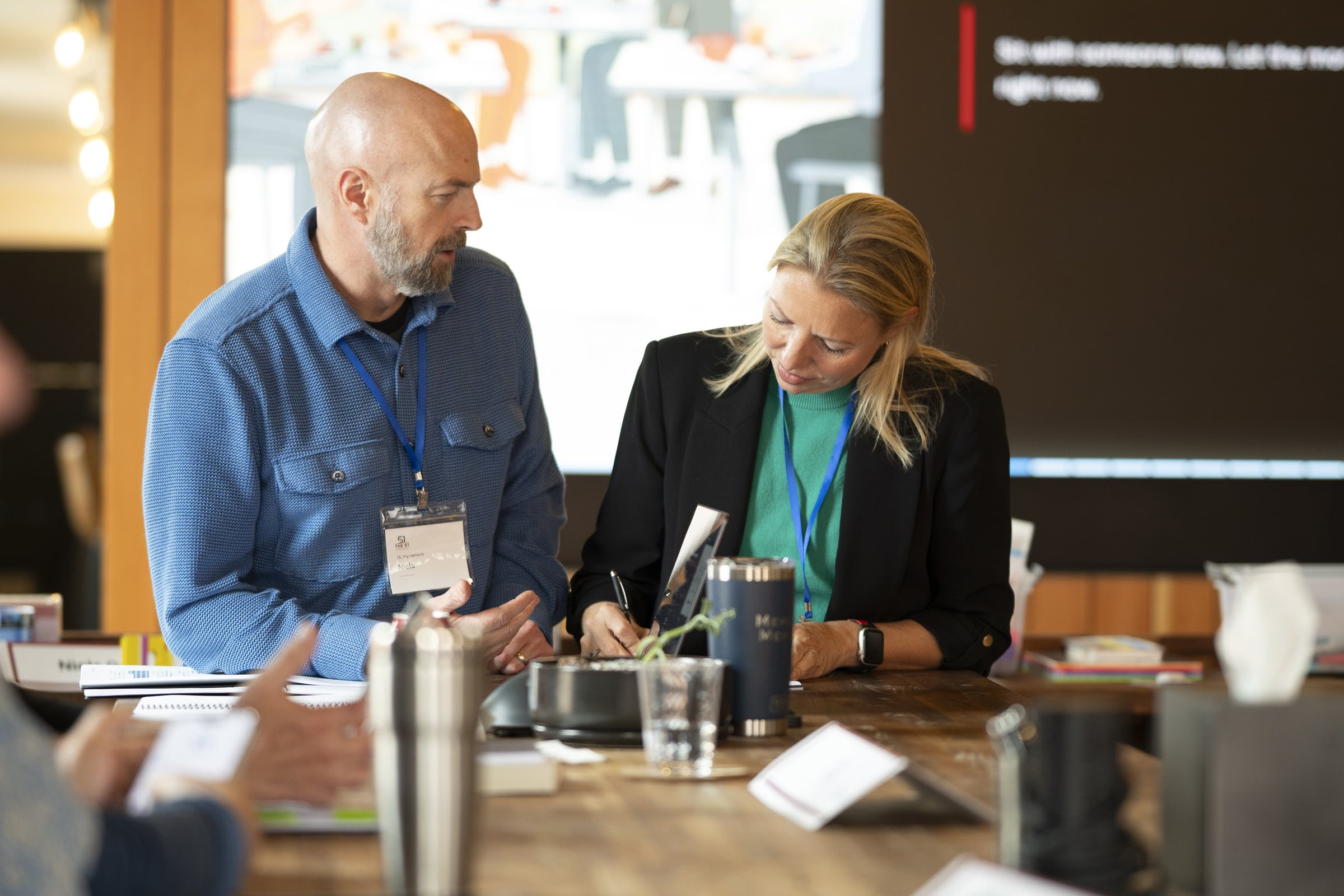
EO, YPO, and Vistage chapters. A room full of founders, in your city. It has run for EO Minnesota, and the room told us what it was worth.
If you want the ideas in a keynote first, that lives on the Speaking page. See the talks.
Fleur and Niels
Niels Gott
Twenty-two years in the Army, a master's in what makes people flourish, and a long habit of watching what pressure does to good leaders.
Fleur de Vries
Executive coach and facilitator, Chicago. Founder of Reimagine Leadership Coaching.
Where it has run
- June 2026. EO Minnesota, Edina. A room full of founders, with follow-up sessions through August.
Proof
The EO Minnesota room's words are with them until they say we can use them. Ask on a call.
Tell me about the team.
Thirty minutes. You describe what's not moving. I'll tell you whether this is the day for it, or whether something else is.
Book a conversation